
Rack Mount High Voltage ESS
High-voltage (240V–720V) commercial energy storage engineered for peak shaving and diesel generator replacement.
Scalable from 24 kWh to 226 kWh per standard 19-inch rack (up to 720V DC). Replaces ₹28/unit diesel running expenses with ~₹11/unit clean storage, delivering full capital payback in 2.5 to 3.5 years.
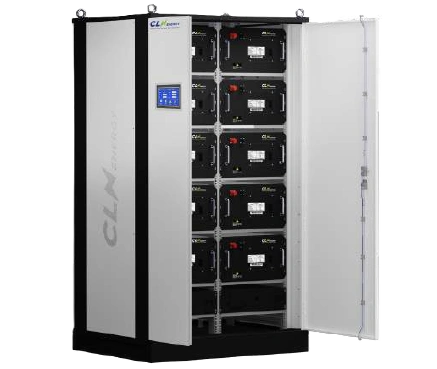
The CLN Rack Mount High Voltage Energy Storage System (ESS) is an enterprise-grade lithium battery architecture designed for industrial facilities, commercial complexes, hospitals, and telecom infrastructure. Operating across high-voltage DC buses from 240V to 720V (and up to 1000V in custom arrays), it maximizes electrical transmission efficiency and cuts thermal cable losses.
Scalable from 24 kWh up to 226 kWh per standard 19-inch rack (and multi-megawatt-hour arrays in parallel), it features a three-tier synchronized BMS (BMU + RBMS + GBMS), Modbus SCADA integration, and dual enclosure ratings (IP20 for data rooms, IP54 for dusty factory floors) to decisively replace polluting diesel generators.
Why High Voltage (HV) Architecture for Industrial Energy Storage?
In high-power commercial facilities, conventional low-voltage (48V) battery banks require massive copper busbars, generate severe heating, and experience high conversion losses. High-voltage architecture solves every bottleneck:
Higher Efficiency, Lower Cable Losses
By boosting operating voltage up to 720V, operating current drops significantly (P = V × I), virtually eliminating I²R resistive losses and heating.
3-Tier Enterprise BMS Safety
Synchronized BMU (cell-level) + RBMS (rack controller) + GBMS (master plant controller) with automated high-voltage DC contactors and circuit isolation.
Dual IP Enclosures: IP20 & IP54
Choose IP20 for clean server rooms and control centers, or IP54 heavy-duty sealed cabinets for dusty manufacturing and semi-outdoor plant yards.
Commercial ROI: The Economics of Diesel Generator Replacement
With commercial diesel prices in India pushing generator power generation to ₹25–30 per kWh, switching industrial backup to a CLN High Voltage ESS creates immediate operational savings:
| Financial & Operational Factor | Diesel Generator (DG Set) | CLN High Voltage Rack ESS |
|---|---|---|
| Cost per Unit (kWh) Delivered | ₹25.00 – ₹30.00 / kWh (High Fuel Cost) | ~₹11.00 / kWh (via Solar / Off-Peak Grid) |
| Switchover Interruption | 15 to 45 Seconds (Causes machinery stoppage) | <5 Milliseconds (UPS Grade — Zero interruption) |
| Peak Demand Charge Penalty Reduction | None (Generators cannot peak-shave dynamically) | Active Demand Shaving (Cuts kVA penalty bills) |
| Maintenance & Consumables | Frequent oil changes, filters, smoke, vibration | Maintenance-free solid-state operation |
| Typical Capital Payback Period | Recurring expense (Zero capital payback) | 2.5 to 3.5 Years (Generates positive ROI) |
Technical Specifications & Rack Configurations
| Configuration Model | Nominal DC Voltage | Module Count per Rack | Total Energy Capacity | Continuous Charge / Discharge | Ideal Application |
|---|---|---|---|---|---|
| CLN-HV-240 | 240 VDC | 5 × 48V Modules | 24 kWh | 100 A (24 kW) | Telecom Towers, Mid-sized Offices & Clinics |
| CLN-HV-384 | 384 VDC | 8 × 48V Modules | 38.4 kWh | 100 A (38.4 kW) | Commercial Buildings & Hospital ICU Wings |
| CLN-HV-512 | 512 VDC | 10 × 51.2V Modules | 51.2 kWh | 100 A (51.2 kW) | Manufacturing Plants, Data Centers & Solar Parks |
| CLN-HV-720 Max | 720 VDC | 14 × 51.2V Modules | 226 kWh (High Density) | 150 A (108 kW) | Heavy Industry, Microgrids & Multi-Rack Plants |
Installed in a data centre
Rack modules of this kind sit behind a 100 kW UPS at the RailTel integrated command control centre in Pondicherry, with 180 kWh of storage. See the data centre project.
Would you like to see the rack mount specifications?
Download the Lithium Solutions brochure for module specifications, rack sizes and dimensions.
Target Commercial & Industrial Sectors
Frequently Asked Questions — Rack Mount High Voltage ESS
Why is High Voltage (240V–720V) better for commercial and industrial energy storage?
High Voltage (HV) systems operate at significantly lower operating current for the same kilowatt power output (Power = Voltage × Current). Lower current reduces I²R resistive heating losses in cables, allows smaller copper cable cross-sections, improves round-trip electrical efficiency above 92%, and enables direct DC-bus coupling with high-power industrial inverters and solar arrays without bulky step-up transformers.
How does the CLN Rack Mount ESS help reduce commercial electricity bills?
It delivers two major financial benefits: (1) Peak Shaving: Discharging stored battery power during factory peak hours to lower Maximum Demand (kVA) contract penalty charges; (2) Time-of-Day (ToD) Arbitrage: Charging the battery from solar or low-cost off-peak grid power at night, and discharging it during high-tariff afternoon/evening slots.
Can this Rack Mount system completely replace a diesel generator (DG set)?
Yes. Operating a diesel generator in India costs approximately ₹25 to ₹30 per unit (kWh), not including maintenance, oil filters, and compliance headaches. Operating a CLN Lithium ESS costs roughly ₹11 per unit. Most commercial and industrial facilities achieve complete capital payback within 2.5 to 3.5 years.
How does the 3-Tier Battery Management System (BMS) work?
The enterprise BMS architecture consists of three synchronized intelligence layers: (1) BMU (Battery Management Unit) at the module level monitoring individual cell voltages and temperatures; (2) RBMS (Rack Battery Management System) overseeing the entire high-voltage string with safety relays and breaker trips; and (3) GBMS / EMS (Global Battery Management System) coordinating multiple parallel racks and interfacing with plant SCADA/EMS via Modbus TCP/IP.
What is the difference between the IP20 and IP54 enclosure options?
IP20 is designed for clean indoor environments such as climate-controlled IT server rooms, electrical control rooms, and hospital basements. IP54 is fully sealed against industrial dust, metal shavings, and water splashing, making it suitable for factory floors, textile mills, cement plants, and semi-outdoor utility yards.
What is the cycle life and expected industrial lifespan?
CLN Rack Mount ESS systems utilize Grade-A Heavy-Duty Prismatic LiFePO4 cells rated to >90% Depth of Discharge — 6,000 cycles on the 314 Ah HV series (>15 years of daily continuous operation) and 3,000 on the 100 Ah HV series and come backed by a comprehensive 5-year commercial warranty.
Hello — how can we help you today?
Chat with us on WhatsApp